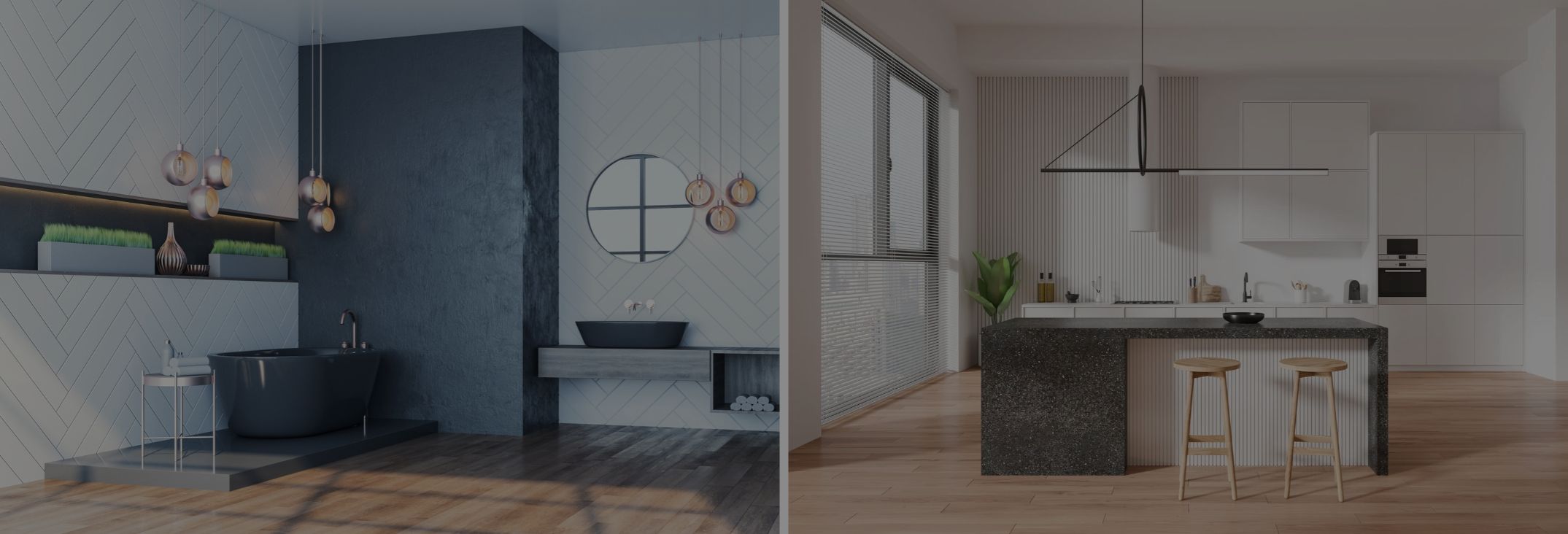
Two of the hardest-working rooms in your home deserve floors that can keep up—and look great doing it.
Kitchens are where mornings begin, groceries land, homework happens, friends gather, and everyone somehow ends up there during a party.
Bathrooms have a different job. They’re where we get ready, wind down and, increasingly, create a little breathing room from the rest of the house.
Maybe that’s why these two spaces are getting so interesting.
The kitchens and bathrooms inspiring us right now aren’t simply prettier versions of what came before. They’re warmer, more personal and more tactile. They’re connected to the rest of the home, and they’re being designed around how people actually live.
If a kitchen or bathroom project is on your list, here’s where we’d start.
The New Warmth
For a while, kitchens and bathrooms became very polished. White and gray dominated; finishes were sleek and everything coordinated perfectly.
Now we’re seeing some personality come back.
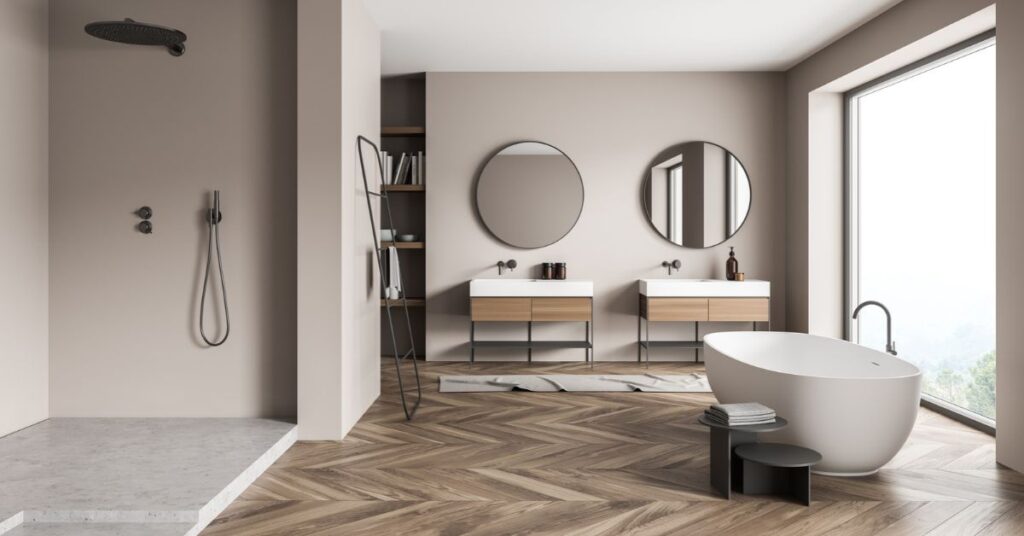
Natural wood, warm stone, creamy whites, taupe, mushroom, sage and olive are bringing softness back into these spaces. We’re also seeing more interest in materials with visible grain, subtle variation and texture—the little imperfections that make a room feel layered rather than manufactured.
That doesn’t mean modern design is disappearing.
Modern is simply getting warmer.
In a kitchen, natural wood cabinetry or flooring can soften streamlined architecture. In a bathroom, stone-look porcelain, warm neutrals and wood tones can turn a once purely functional room into something much more inviting.
And rather than matching every finish perfectly, today’s most interesting rooms mix materials with confidence. Wood can sit beautifully beside stone. Matte finishes can offset polished surfaces. Warm tones can balance cooler ones.
The goal isn’t perfect coordination. It’s creating a room that feels considered, collected and personal.
Kitchens That Connect
One of the biggest shifts in kitchen design isn’t actually about the kitchen.
It’s about everything around it.
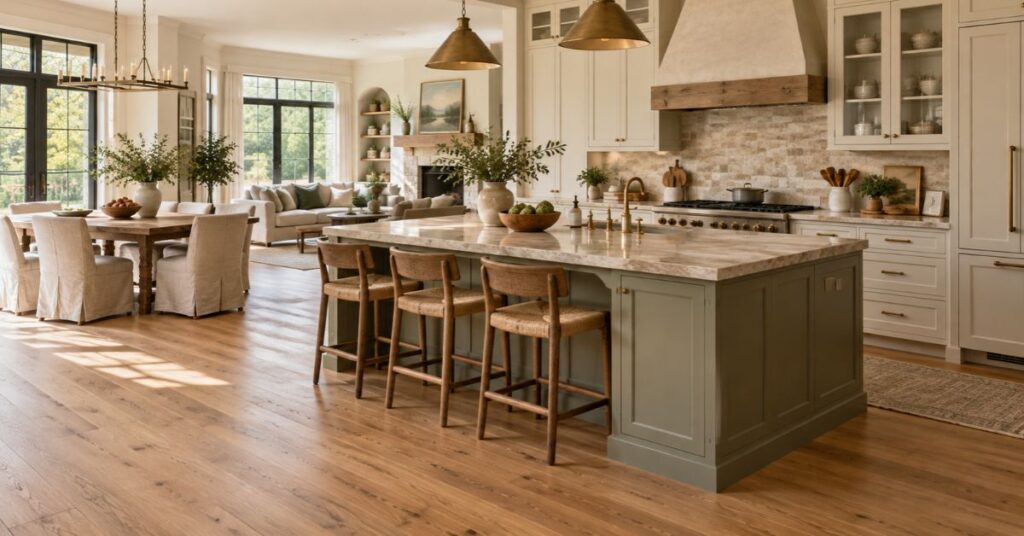
Today’s kitchens are often visually connected to family rooms, dining areas, hallways and entries. That changes the flooring conversation because the floor you choose for the kitchen can influence how the entire main level looks and feels.
Continuing one floor through several connected spaces can create a calmer, more cohesive interior. It can also make smaller homes feel more expansive by eliminating unnecessary visual breaks between rooms.
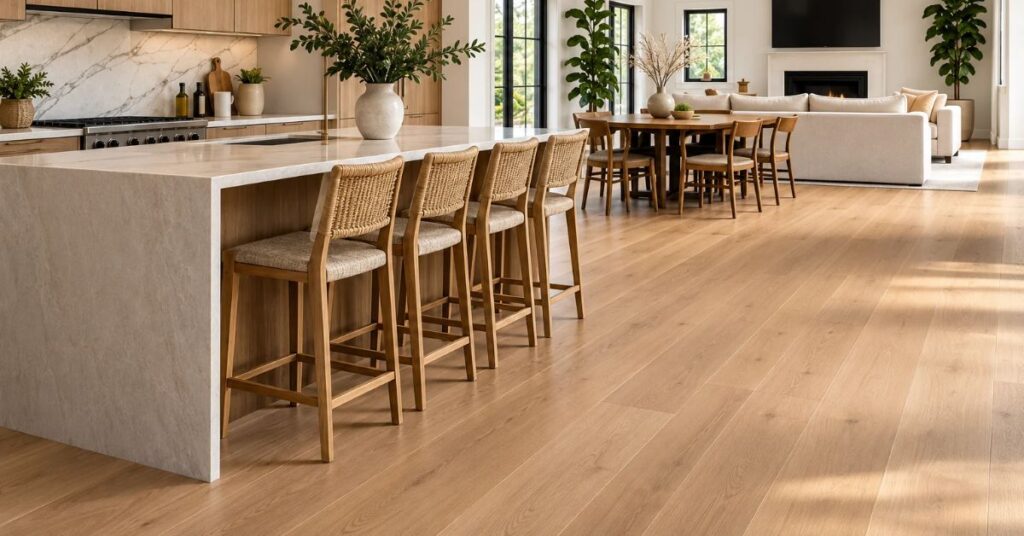
Hardwood remains a beautiful choice for homeowners who want authentic natural character. Engineered hardwood can provide additional installation flexibility, while today’s luxury vinyl and laminate offer increasingly sophisticated wood visuals for households where durability and easy maintenance are priorities.
The right answer depends on the home, the household and how the space is used.
Instead of simply asking, What’s the best kitchen floor?, it can be more helpful to ask:
How do I want my kitchen to connect to my home?
A New Look at Wood
Wood is playing an especially important role in that warmer, more connected kitchen.
We’re seeing beautiful natural and mid-tone woods, visible grain, matte and low-sheen finishes, and a move away from the cool gray-washed looks that dominated for years.
And if you’re considering wood cabinetry, don’t automatically assume a wood floor is off the table.
The two don’t need to match.
In fact, matching them too closely can make a room feel flat. Creating some distinction in tone, grain, plank scale, or finish allows the materials to complement each other while still having their own identity.
Your woods don’t have to match. They have to belong together.
Where to Make a Statement
Every beautiful room needs a hierarchy.
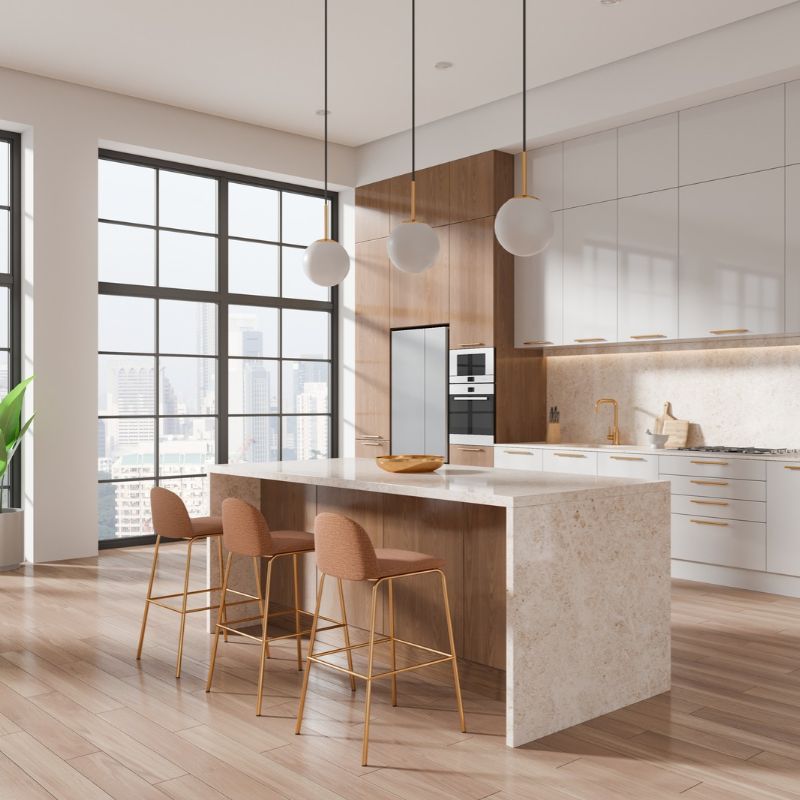
If you’ve chosen dramatic cabinetry, a heavily veined countertop and statement lighting, your floor may be most successful when it quietly pulls everything together.
Natural wood, warm stone looks, restrained porcelain and beautifully detailed luxury vinyl can all play that supporting role. Sometimes the floor doesn’t need to get noticed—it makes everything else in the room look better.
But if the rest of the kitchen is relatively quiet, flooring or tile can become the feature.
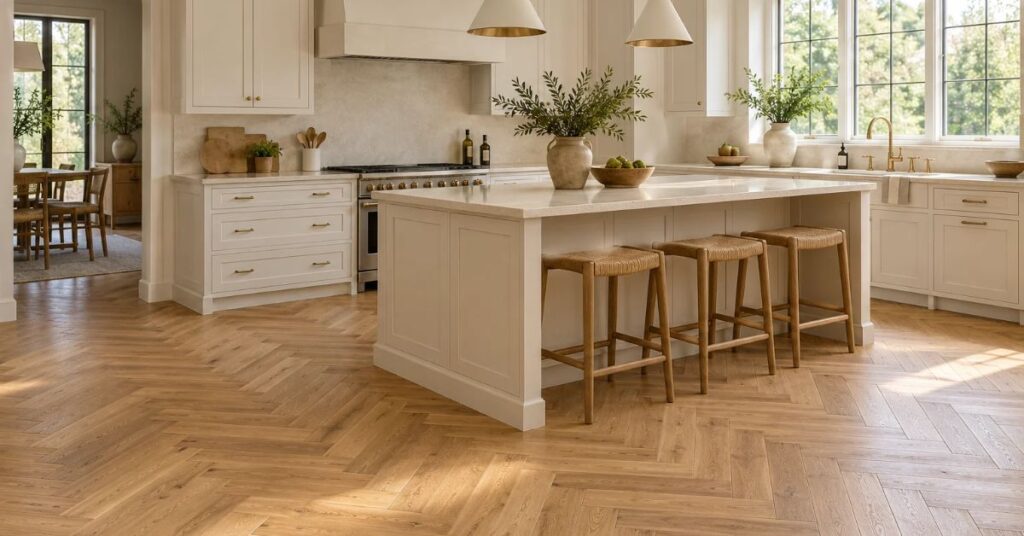
A herringbone layout can introduce architecture without adding another color. Patterned tile can give a smaller kitchen enormous personality. Checkerboard-inspired designs can feel fresh again when the colors, scale and surrounding materials are right.
The same thinking applies to the backsplash.
Because a backsplash occupies relatively little square footage, it’s one of the easiest places to take a design idea a little further. Handmade-looking tile, interesting shapes, subtle texture, color or dramatic stone looks can transform the room without overwhelming it.
You can also rethink where the backsplash ends. Taking tile higher on the wall—or using it as a larger architectural surface—can make it feel like an intentional part of the room rather than simply protection behind the counter.
The trick is deciding what deserves attention.
If your countertop has extraordinary movement, perhaps the backsplash gets quieter. If the cabinetry and countertops are restrained, this might be exactly where you do something unexpected.
Not everything can be the star. But something can.
The Bathroom Is Becoming a Retreat
The idea of a spa bathroom isn’t new.
What feels different now is how we’re interpreting it.
It doesn’t necessarily mean shiny marble, perfect symmetry and a room that looks like a luxury hotel. Increasingly, it means warmth, calm and materials that feel good to live with.
Warm stone, soft neutrals, natural-looking tile, wood vanities, matte finishes, thoughtful lighting and surfaces with visible texture can create a space that feels luxurious without feeling overly designed.
It’s a quieter kind of luxury.
A bathroom should certainly look beautiful. It should also feel good first thing in the morning, work when everyone is trying to get out the door and be somewhere you’re happy to return to at the end of the day.
That’s where flooring and tile become especially important.
THINK BIGGER
Bigger Tile, Quieter Rooms
Large-format porcelain is one of the most interesting ways to create that sense of calm.
Larger tile means fewer grout lines interrupting the surface, which can make a bathroom appear cleaner, quieter and more expansive. Depending on the product and installation, fewer grout joints may also simplify maintenance.
Today’s porcelain can recreate the visual character of limestone, marble, travertine, concrete and other natural materials in remarkably sophisticated ways.
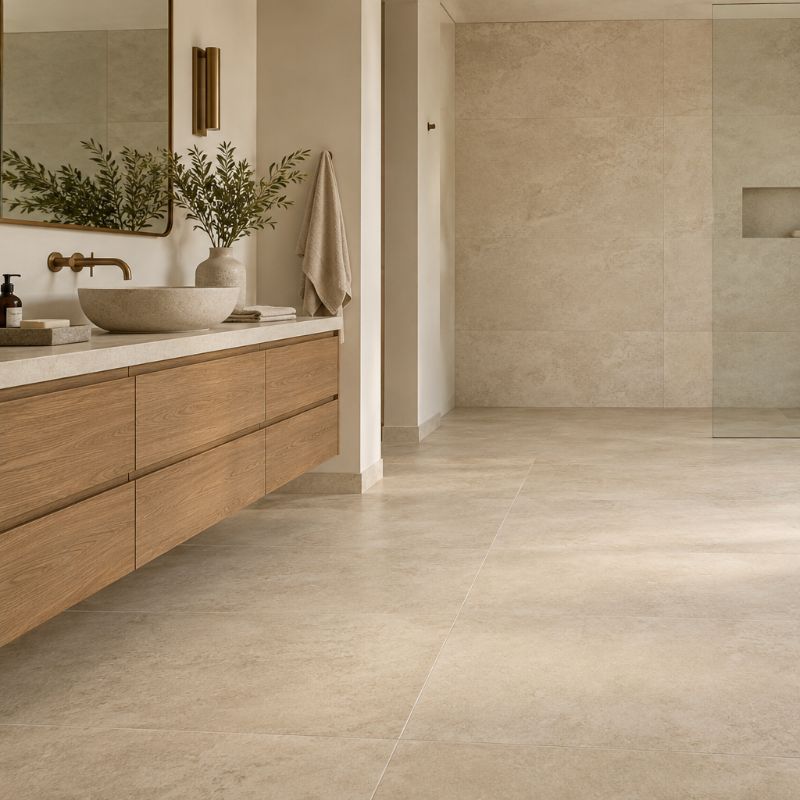
And it doesn’t have to stay on the floor.
Using the same or complementary material across the floor and shower walls can create a beautifully enveloping effect. A tiled vanity wall can become an architectural feature. Texture can turn an otherwise quiet neutral surface into something special.
It’s part of a broader idea we love:
Tile doesn’t have to stop where you expect it to.
Texture Is Changing the Neutral Bathroom
One of the easiest mistakes to make with a neutral bathroom is assuming that neutral means everything should look the same.
It doesn’t.
A room built around cream, taupe, warm white or soft stone tones can have enormous depth when the surfaces themselves are interesting.
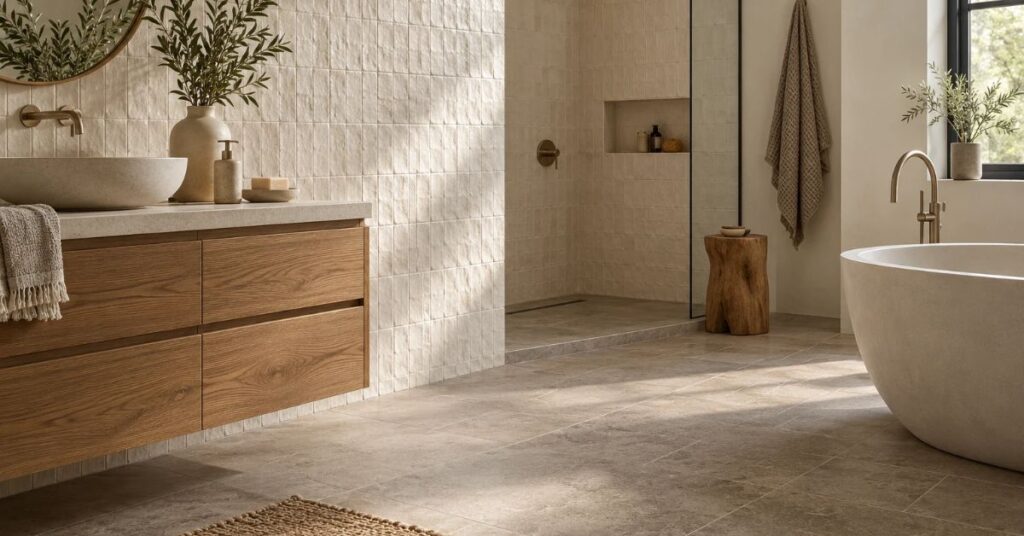
A subtly dimensional wall tile can sit beside a smoother floor. Natural-looking stone variation can contrast with warm wood grain. A matte finish can be balanced with a little polish. Handmade-looking edges can soften cleaner architectural lines.
Instead of adding another color or pattern, texture does the work.
This is also why seeing materials in person matters so much. A tile that looks relatively simple on a screen may reveal movement, variation and texture when you see a larger sample and touch the surface.
Neutral doesn’t have to mean flat.
Beautiful Has to Work
Kitchen and bathroom surfaces have demanding jobs.
Kitchen floors deal with spills, dropped utensils, chairs, pets, traffic and the mysterious ability of crumbs to travel considerably farther than seems physically possible.
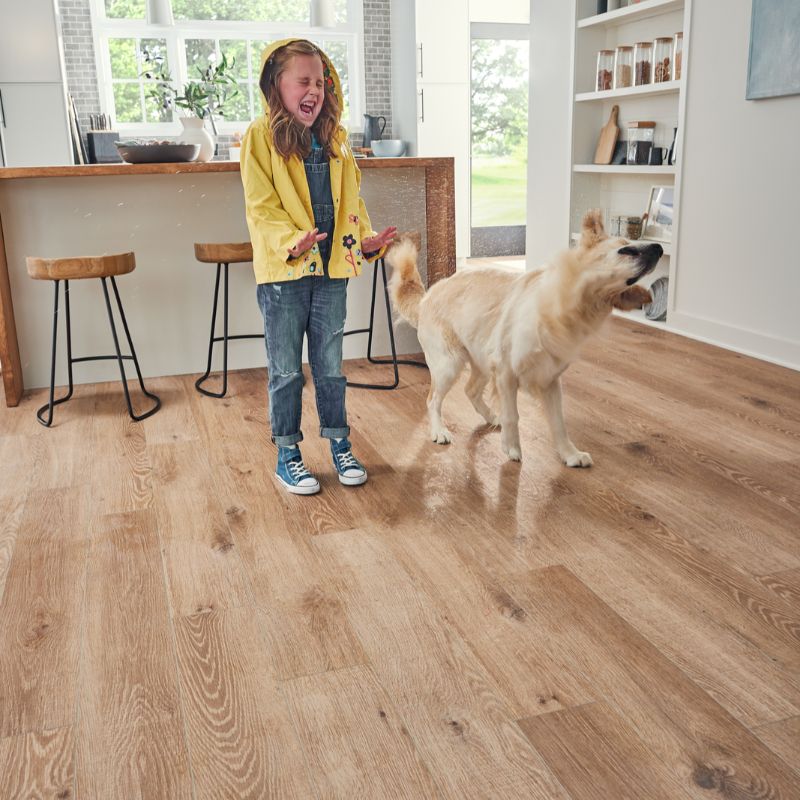
Bathrooms add water, humidity, bare feet and frequent cleaning to the equation.
Performance shouldn’t be something you consider after you’ve fallen in love with a product. It should be part of the design conversation from the beginning.
Porcelain and ceramic tile offer tremendous possibilities in kitchens and bathrooms because of their durability and enormous range of colors, sizes, textures and visuals.
Hardwood and engineered hardwood can be beautiful choices in kitchens depending on the product, installation conditions and expectations of the homeowner. Luxury vinyl is another option worth exploring when water resistance, maintenance and a wood look are priorities.
In bathrooms, suitability for wet environments becomes particularly important. When choosing tile, look beyond color and ask about finish, texture, slip considerations, grout, maintenance and exactly where a particular product is rated to be installed.
Beautiful matters. So does Tuesday morning with wet feet.
Bringing the Whole Room Together
Perhaps the most useful kitchen or bathroom trend right now is that there isn’t one prescribed look.
A beautiful kitchen can be warm and traditional, clean and contemporary, organic and natural or full of color and personality.
The same is true of a bathroom.
What’s changing is the way we put those rooms together. We’re paying more attention to how materials relate to each other, how one room flows into another and how a space will actually feel to live in.
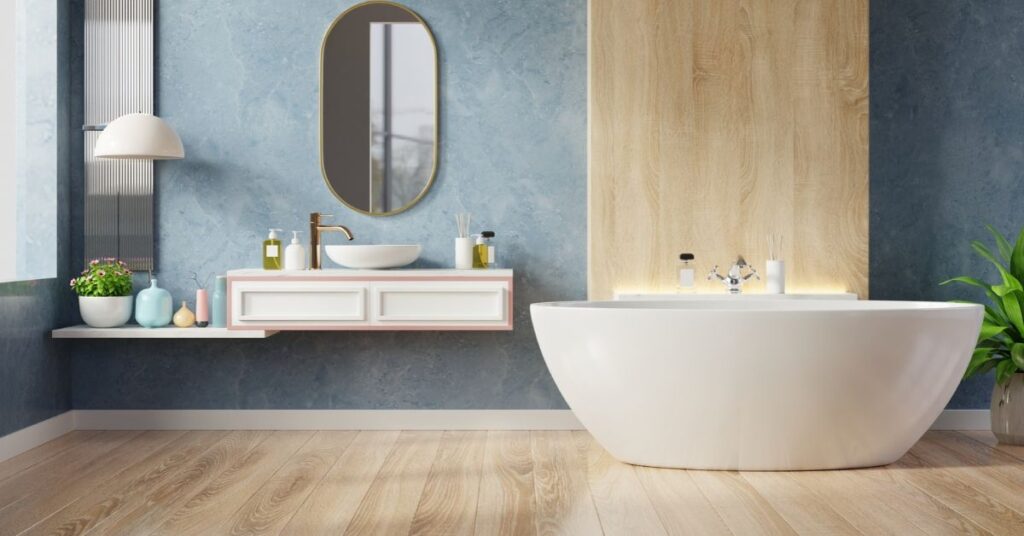
That’s why it’s worth looking at the entire room before making an individual flooring or tile decision.
Bring the cabinet sample. Bring the countertop. Bring the paint color, fabric swatch or tile you’ve already fallen in love with. Bring photos of the room and the spaces around it. Bring your Pinterest board.
Seeing materials together—in actual scale, under actual light—can completely change your opinion. Sometimes the floor you loved on its own isn’t the right floor beside the cabinet. And sometimes the combination you never would have considered becomes the obvious choice.
Ideas Worth Exploring
If you’re gathering kitchen or bathroom inspiration, look beyond one specific “trend” and pay attention to the combinations that make a room feel current.
Warm white with natural oak. Creamy stone looks with soft greens. Large-format porcelain with warm wood cabinetry. A restrained kitchen with an unexpected backsplash. Wood-look flooring flowing from the kitchen into the family room. A bathroom built almost entirely around texture rather than color. A quiet floor beneath dramatic countertops.
And don’t be afraid to mix something timeless with something a little more adventurous.
A kitchen or bathroom renovation is a significant investment. You want it to feel current when it’s finished, but you don’t want every choice to announce the year it was installed.
Choose the things you expect to live with for years thoughtfully.
Then give yourself somewhere to have a little fun.

Come Get Inspired
You don’t need to walk into Floors USA knowing exactly what you want.
That’s kind of the point.
At Floors USA, you’ll find 40,000 square feet of inspiration across hardwood, engineered hardwood, luxury vinyl, laminate, carpet, tile, stone, backsplashes and more.
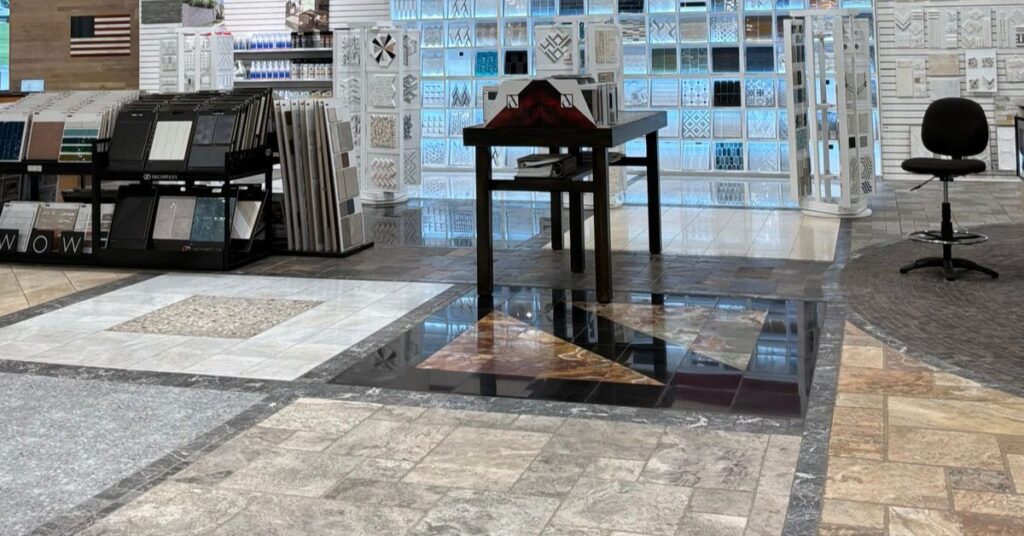
Walk the showroom. Touch the materials. Put samples beside each other. Compare warm and cool tones. Look at something you thought you’d never choose.
Come with a complete renovation plan—or come with a photo of a kitchen you love and absolutely no idea how to get there.
We’ll help you start putting the pieces together.
Because the best kitchen or bathroom doesn’t begin with a trend.
It begins with discovering what feels right for your home.
Floors USA. It’s Worth The Trip.
SHOP THIS LOOK
Explore Kitchen & Bathroom Tile & Stone

Fall Flooring Trends: The Looks Inspiring Beautiful Homes Right Now